
As we sit down to try a slot like Chicken Road free spins bonus, the colourful farmyard design and fun animations can readily distract us from what really matters: the underlying mechanics that establish if a slot is fair, transparent, and valuable for our time. Honesty is not a unclear assurance; it is constructed from tangible, provable parts such as the return to player rate, the variance type, the layout of the paytable, and the method extra modes are triggered and resolved. In this piece we walk through each of these aspects using Chicken Road as our primary example. We explain how to understand the figures, what questions to ask before placing a stake, and how to leverage the complimentary demo to build your own opinion. By the end you will gain a well-defined, consistent method for judging every slot title, not just this one, so that each spin is backed by understanding rather than guesswork.
Grasping Return to Player and Why It Matters
Return to Player, or RTP, is the theoretical percentage of all wagered money that a slot game is programmed to pay back over a very large number of spins. When we examine Chicken Road, the first figure we look for is its RTP, which for many modern video slots sits in the range of 95% to 97%. This number does not tell us what will happen in a single session, but it does indicate the long-term mathematical edge the game holds. A slot with a 96% RTP, for example, is programmed to return €96 for every €100 wagered over millions of rounds, retaining €4 as the house advantage. We always verify the RTP from the game’s information page or the provider’s official documentation rather than leaning on hearsay, because some operators may present the same title in different RTP configurations. For Chicken Road, examining the help screen inside the demo reveals the exact figure, and we suggest noting it before you invest real money.
Why does RTP count for fairness? Because it is one of the few objective benchmarks we can use to compare games. A slot with a 94% RTP is mathematically more pricey to play over time than one with 97%, all else being equal. However, RTP alone does not convey the full story. Two games can have the same RTP yet behave completely differently due to volatility. We therefore consider RTP as a starting point: a threshold that helps us weed out games that pay back too little, while still providing room to study how those returns are spread. For Chicken Road, we would expect a competitive RTP that corresponds with industry norms, and we would cross-check it against independent audit reports where available. If the RTP is not clearly listed, that in itself is a red flag, because transparency is a cornerstone of fair slot mechanics.
Reels, Rows, and Winning lines: The Foundations of Chicken Road
The reel arrangement of a slot governs how winning combinations are created, and Chicken Road uses a common setup that is straightforward. The game shows a group of reels, generally five, each presenting a set of rows, usually three, forming a clear grid of symbols. Winning outcomes are evaluated against active winning lines, which are predetermined patterns marca.com running from the left reel to the right. In a lot of current slots, including Chicken Road, the amount of paylines is set, meaning all spins includes all available lines automatically. We typically see 20 or 25 paylines in this style of game, but the exact count can be checked by accessing the paytable. Being aware of the payline structure helps us grasp why certain symbol positions are more important than others and how near-misses are a natural part of the slot design rather than a sign of tampering.
In addition to the core layout, we also look at how the game manages symbol payouts. The paytable inside Chicken Road shows the coin values for matching three, four, or five of a kind on a payline, and these values adjust with the bet size. Fair mechanics demand that the paytable is accessible, well-defined, and aligned with the promised RTP. We check whether more valuable symbols are rarer on the reels, which is a common approach of balancing the math. In Chicken Road, the top-paying symbol could be the rooster or the chicken by itself, while the lower-value icons are represented by playing card suits or farm-related items. By analyzing the reel strips and symbol distribution in the demo, we can verify that the game’s design follows transparent, logical rules that offer each player the same random chance on each spin.
Complimentary Spins and Win Multipliers: Extra Features in Action
Special features are where Chicken Road reveals much of its payout structure, and free spins with multipliers are the centerpiece. When we activate the free spins round by landing the needed scatter symbols, the game grants a number of spins at no additional cost. During these spins, a payout multiplier may be used to all wins, often starting at a modest value and growing with each successive win or special symbol obtained. In some versions of Chicken Road, a increasing multiplier climbs throughout the feature, creating the possibility for a single big payout at the end. We pay close attention to how the multiplier restarts or increases, because this mechanism heavily impacts the volatility and the top win potential of the game.
Judging the integrity of bonus features entails more than just observing them unfold. We need to determine whether the free spins are played on the identical reel set as the main game or on a dedicated set with richer symbol arrangements. Many slots, possibly such as Chicken Road, use dedicated bonus reels that are filled with premium symbols and more wilds, which is a valid design choice as long as it is stated. We also verify whether the feature can be re-triggered and what the top win cap is. A fair game specifies its top payout plainly, so that we comprehend the ceiling even when payout multipliers are rising. In Chicken Road, the demo enables us to activate the feature numerous times and observe the consistency of the rules, offering us assurance that the bonus round functions according to a fixed, checked mathematical model rather than an random on-the-fly change.
Wilds and Scatters: Distinctive Symbols That Increase Impartiality
Special icons are the engine that powers thrill and equity in a game, and Chicken Road features both wild and scatter symbols that we need to understand. The wild icon, often portrayed as a golden egg or the game logo, substitutes for any regular paying sign to fill or improve a winning line. This system increases the hit frequency slightly and can convert a losing spin into a winner, which softens the volatility between bonus events. Crucially, the wild does not replace for the scatter, preserving the honesty of the bonus trigger. We always examine the paytable to determine whether wilds carry their own payout when multiple appear on a payline, because this brings an extra layer of value to the base game.
The scatter sign in Chicken Road is usually the key to accessing the main bonus function. Hitting a certain quantity of scatter signs anywhere on the reels, not essentially on a payline, starts free spins or a bonus round. This is significant for equity because scatters work autonomously of paylines, signifying their occurrence is purely a matter of random reel stops. We note in the demo how many scatters are required to trigger the function and whether extra scatters during free spins can restart the round. The clarity of scatter rules allows us to determine the approximate rate of bonus activation, which is a vital piece of the fairness challenge. If the game hides these specifics or makes them unclear, we would consider that a negative mark against its overall integrity.
Volatility: How Often and The Size You Can Win
Volatility, also called variance, defines the risk profile of a slot game. It indicates how frequently wins are likely to occur and what size those wins tend to be. In our analysis of Chicken Road, we assess volatility by examining the behaviour of the base game over several hundred demo spins. A low-volatility slot delivers many small, regular payouts that keep the balance ticking over, while a high-volatility game often goes through long dry spells before rewarding the player with a larger win. Chicken Road typically sits in the medium to high volatility range, meaning that patience is required, but the bonus features can deliver substantial multipliers when they land. We never take the provider’s label at face value; instead we use the demo to feel the rhythm of dead spins versus paying combinations.
Grasping volatility is crucial for evaluating fairness because it directly impacts your playing experience and bankroll management. A game can have a perfectly fair RTP yet still feel punishing if its volatility does not match your expectations. For instance, if we approach Chicken Road expecting frequent small wins but encounter long losing streaks, we might wrongly suspect the game is rigged, when in fact it is simply designed to concentrate payouts in the bonus rounds. We therefore recommend that every player spend time with the free play version to gauge volatility firsthand. Pay attention to how often scatter symbols appear, how long it takes to trigger free spins, and the typical size of base game line hits. These observations build a personal volatility profile that no theoretical number can replace.
A Guide to Playing Chicken Road: A Detailed Walkthrough
Mastering Chicken Road is straightforward, but a systematic approach ensures we don’t overlook any setting that might affect fairness or our enjoyment. We always begin by loading the free demo version to familiarise ourselves with the controls without financial pressure. The first step is to locate the bet adjustment buttons, usually represented by plus and minus icons, and set a wager that feels comfortable. After that, we open the paytable by clicking the information or “i” button. In this section, we study the value of each symbol, the payline patterns, and the rules for wilds, scatters, and bonus features. Taking five minutes to absorb this information before spinning prevents costly misunderstandings later.
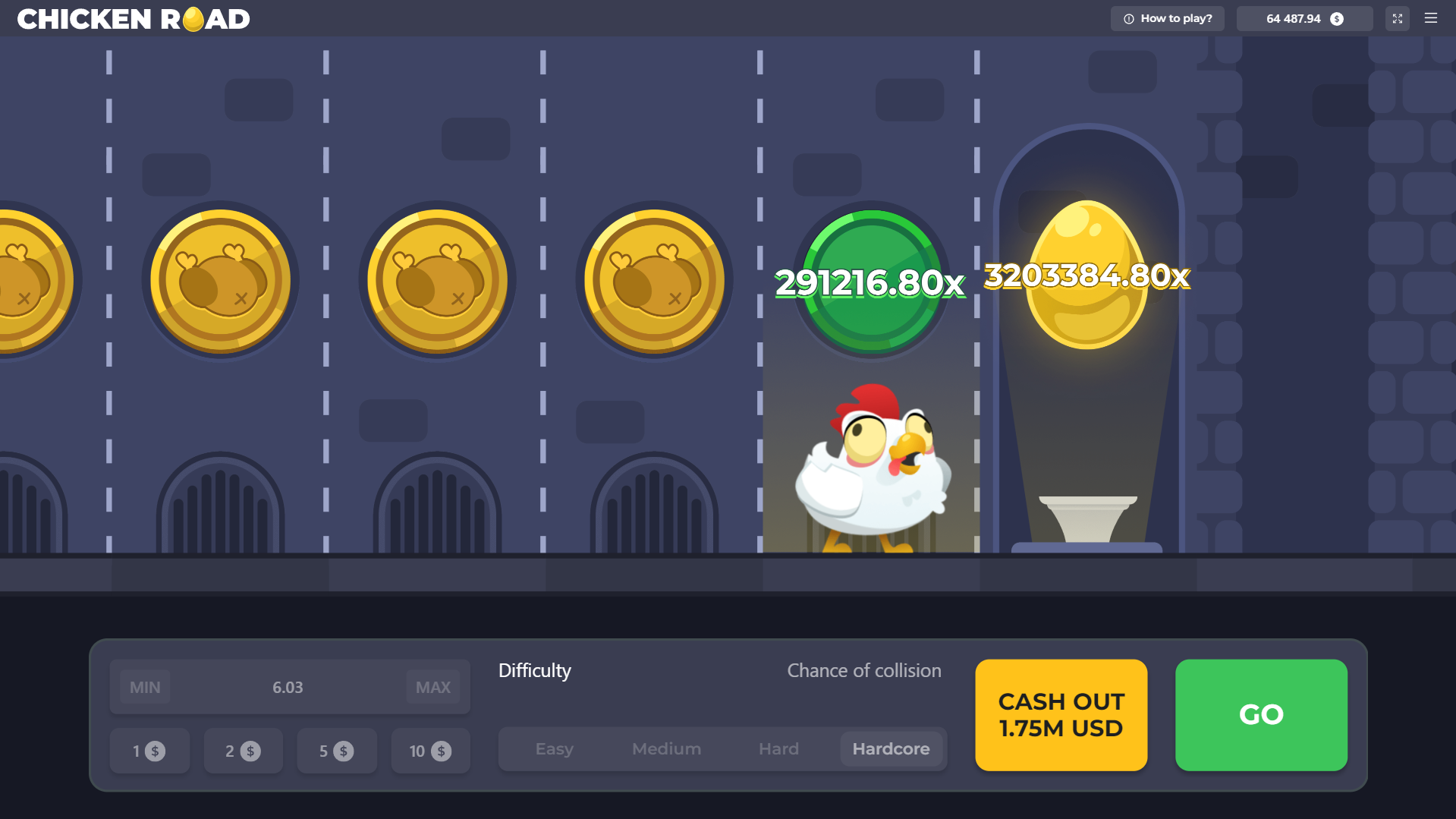
Once we understand the paytable, we can start spinning. The following steps outline a sensible routine for evaluating Chicken Road in demo mode:
- Set the bet to the minimum allowed and spin at least 50 times to observe base game hit frequency and the behaviour of wild symbols.
- Gradually increase the bet to a mid-range level and continue spinning, noting how the balance fluctuates and how often scatters appear.
- Trigger the free spins bonus at least three times to confirm the number of free spins, the multiplier rules, and the possibility of retriggers.
- Review the game history or session stats if possible, to see the actual RTP over your demo session, remembering that short-term results are highly variable.
- Experiment with the autoplay function, if present, to understand how loss limits and win limits can be set to manage risk.
By following this sequence, we build a hands-on understanding of Chicken Road that goes far beyond reading a review. We witness firsthand how the game reacts to various bet sizes and how the bonus round behaves when tested repeatedly. This practical understanding is the foundation for any fair slot assessment.
Stake Range and Top Payout: Constraints That Influence Your Strategy
The stake range of a slot game sets how much we can bet per spin, and Chicken Road presents a versatile range that accommodates both conservative players and those chasing bigger thrills. Generally, the minimum bet begins at a low amount, perhaps €0.20 or €0.25, while the maximum can hit €100 or more per spin. This range is important for fairness because it enables us to adjust our stake based on our bankroll and risk tolerance without being obliged into a one-size-fits-all model. We always check the minimum and maximum bet straight in the game interface, as these values can vary between different online platforms offering the same title. A large bet range also indicates that the game’s maths are designed to work correctly at all stake levels, which is a indicator of a well-built slot.
Just as crucial is the maximum win, which is the most a single spin or bonus feature can payout relative to the bet. In Chicken Road, the max win is often displayed as a multiplier, such as 5,000x or 10,000x the stake. This figure tells us the upper boundary of what the game can offer, and it is a vital element of fairness because it prevents the casino from having unlimited liability while also creating realistic expectations for the player. We seek the max win to be clearly indicated in the game rules. If the cap is obscured or ambiguous, we cannot fully assess the risk-reward balance. A open max win, combined with the RTP and volatility, allows us to determine whether the game’s potential rewards warrant the inherent risk. For Chicken Road, the demo provides an opportunity to observe how close typical bonus rounds come to that ceiling, helping us choose if the game suits our personal goals.
Assessing Fairness Through Demo Play and External Checks
Free play is the most powerful tool we have for evaluating a slot’s fairness before betting real money. With Chicken Road, the free version gives us unlimited access to the exact same random number generator and game rules that control the paid version. This means we can conduct hundreds or even thousands of spins, monitor outcomes, and develop a reasoned opinion about the RTP, volatility, and bonus frequency. We suggest keeping a simple log of key events: the number of spins between scatter triggers, the average payout of free spin rounds, and the size of the largest base game hit. Over a large sample, these numbers should roughly match the theoretical values published by the provider. If we notice persistent, unexplained deviations, that calls for further investigation or a decision to play a different title.
Beyond personal testing, we also seek evidence of independent audits. Reputable slot providers present their games to testing laboratories such as eCOGRA, iTech Labs, or GLI, which verify that the random number generator is truly random and that the advertised RTP is accurate. While Chicken Road itself is a game and not a casino, the provider behind it typically shows certification badges on its official website or within the game’s help files. We examine these seals and, when possible, confirm them through the laboratory’s public database. A game that has passed such audits carries a strong signal of fairness, because the maths have been reviewed by a third party with no stake in the outcome. Combining independent certification with our own demo observations creates a robust, two-layer evaluation that leaves little room for doubt.
Common Questions
What’s the essential number to check for fair slot mechanics?
The return to player percentage, or RTP, is the key single figure. It indicates the theoretical long-term payback of the game. For Chicken Road, always confirm the RTP from the official paytable or provider website. A good RTP typically is between 95% and 97%. However, RTP must be evaluated alongside volatility and bonus features to obtain the full picture of a game’s fairness.
How do I test the fairness of Chicken Road without depositing?
Try the free demo version of Chicken Road, which is easily accessible. The demo utilizes the same random number generator as the real-money game. Spin several hundred times, track how often bonus features trigger, and note the size of payouts. While short-term results differ, consistent patterns will develop that help you to judge whether the game behaves as advertised.
Is a high volatility slot mean the game is rigged?
No, high volatility is a design decision, not a sign of unfairness. A high-volatility game like Chicken Road distributes winnings less frequently but presents the potential for larger wins. Fairness relies on whether the RTP and game rules are transparent and independently audited. Volatility simply describes the risk profile, and it is your job to select a game that matches your bankroll and patience.
Are the bonus features truly random in Chicken Road?
Yes, bonus features such as free spins and multipliers are activated by the random number generator, just like base game outcomes. The scatter symbols that trigger the feature appear according to a fixed probability. In a certified game, this process is audited to ensure it cannot be manipulated. You can confirm the randomness by playing the demo and observing that triggers occur at unpredictable intervals with no visible pattern.